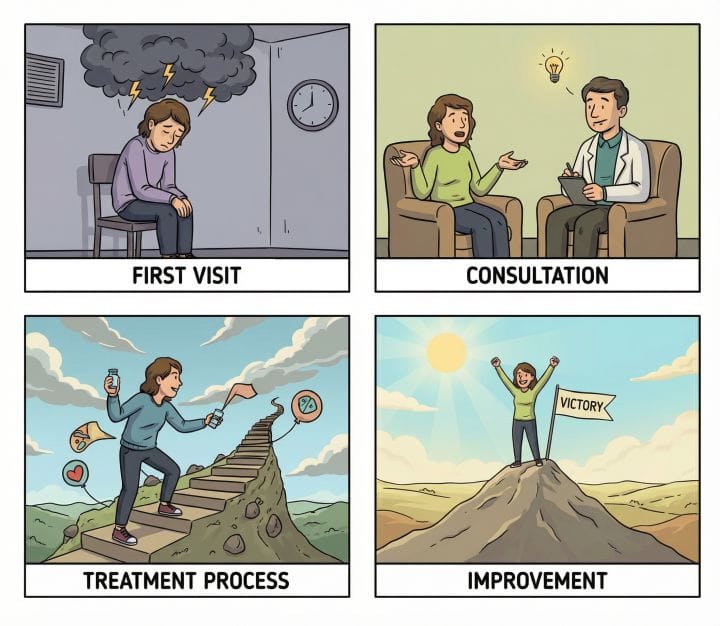
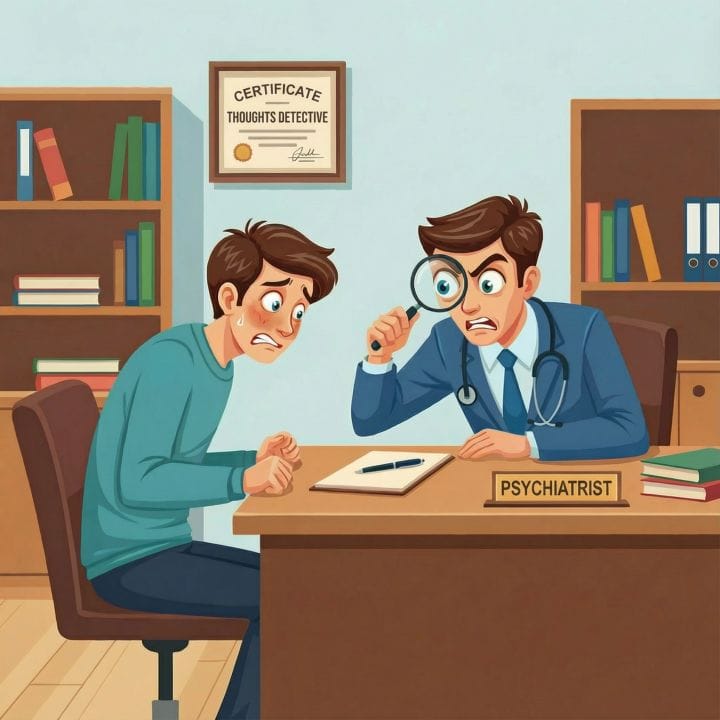
A Visit to the Psychiatrist – What Does the Psychiatrist Ask?
Introduction
When visiting a psychiatrist for the first time in their life, many people may feel apprehension and discomfort. This is hardly surprising – having never dealt with a mental health professional before, one does not know what to expect from such a visit. What will the psychiatrist ask me? Will I be judged as “abnormal”? How will I be treated? Will the psychiatrist “see right through me” and spot something I don’t want anyone to know about? Certainly, there is a group of people for whom such questions come to mind before their first-ever appointment.
On the other hand, there are also those who expect the visit to be limited to a dialogue roughly like this:
– “Doctor, I have this and that symptom, it bothers me, I need some medication so I don’t have it.”
– “I understand, of course, there is a medication that helps with that; here is the prescription, please take it once a day.”
In reality, a visit to a psychiatrist is neither the materialization of the first group’s fears nor the fulfillment of the second group’s simple expectations. It is a rather comprehensive visit because it requires the doctor to gather complex information about the patient, which is necessary to properly identify health problems and their causes. This, in turn, enables an accurate diagnosis and subsequently—the implementation of appropriate treatment and recommendations.
What will the psychiatrist ask about?
The scope of necessary information can be divided into several groups:
1. Reason for seeing the psychiatrist – experienced symptoms, what they involve, when they started, their dynamics (e.g., do they get worse, and if so, when), etc.
2. General information about the patient – age, education, profession, marital status, family.
3. Medical health information – are you being treated for other diseases, do you take any permanent medications, past illnesses, surgeries, injuries, substance use (alcohol, cigarettes, drugs), etc.
4. General situation – did the appearance of symptoms follow difficulties in any area of life (personal, family, professional, health, financial, etc.)?
5. Difficulties experienced in childhood – many symptoms in adulthood can be a consequence of difficult experiences in childhood: a parent’s alcoholism, violence from a parent or peers, death of a loved one, an accident, severe trauma, etc.
6. Chronic diseases, mental disorders, and addictions in the family.
The Course of the Conversation
The order in which specific groups of questions appear is quite individual – it depends on both the doctor and the patient. There are psychiatrists who strictly stick to a specific order of questioning, and those who allow the patient more spontaneity in their speech, weaving questions into the naturally emerging threads of the conversation. Patients also fall into two categories: those who prefer being asked concrete questions, and those who feel the need to spontaneously tell their story and describe their difficulties.
Your Right to Privacy
Regardless of differences in interview style, it is up to the patient to decide to what extent they wish to provide information to the psychiatrist. Everyone has the right to refuse to answer a question or to state that they do not want or do not wish to talk about a given topic. On the other hand, if a certain thread is important in the diagnostic process, the doctor should mention this, explaining why and how that specific information might affect the diagnosis and/or method of treatment.
It is undeniable that a patient’s openness (which is linked to trust in the doctor) facilitates both the diagnostic process and treatment. Consequently, a lack of trust and openness can significantly hinder or even prevent this process. Of course, the psychiatrist’s participation is very important in building trust: their professional manner, behavior, communication style, and gestures. The conversation should be characterized by kindness and respect – under no circumstances should the patient feel “interrogated” during the visit. Nor should one fear being judged poorly. The psychiatrist’s role is to provide help and support, not to pass judgment.
Summary
The first visit to a psychiatrist is not an exam that you pass or fail, nor is it a séance during which the doctor “reads your mind.” It is a professional medical conversation aimed at understanding your difficulties and finding the best way to help. Remember that the psychiatrist is there to help you, not to judge. The more they know about your situation, the more effectively they can propose appropriate treatment. Your honesty and openness are key to the success of the therapy, but the decision regarding the scope and details of the information provided always depends on you.