
5 common myths about psychiatry
In my daily practice, I encounter many fears and doubts that hold people back from seeking psychiatric help. Many of these stem from false beliefs—myths that have existed in society for years, and sometimes decades. I decided to gather the most common ones and show how they compare to reality.
1. Myth One: A psychiatrist is a doctor for “crazy people”
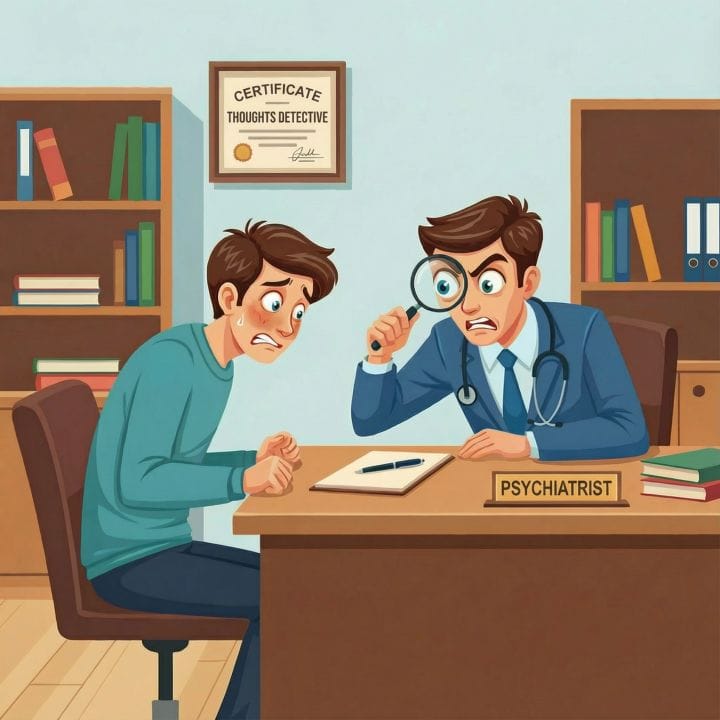
This belief is perhaps the most harmful. The word “crazy” itself has a pejorative and offensive meaning when referring to people with mental disorders. Pop culture (especially certain films) has reinforced the image of a psychiatric patient as an unpredictable person locked in a hospital with bars on the windows, and psychiatrists and medical staff as completely insensitive or even sadistic. This stereotype creates a huge barrier of shame and fear—people are afraid that visiting a psychiatrist is an admission of “madness.” As a result, they avoid help, often until a serious crisis occurs.
What is the reality? Firstly, only about 8% of patients utilize hospital treatment. Of those, only a small fraction experience disorders involving agitation or unpredictability. These are most often episodes of short and transient exacerbations of the illness. Even within this group of people suffering from the most serious mental disorders, a large portion returns to full family, social, and professional functioning after the acute symptoms subside (often holding socially demanding roles). Others, whose illness never fully regresses, remain withdrawn and less active, rarely leaving home. Thus, even among the most severely ill, the image perpetuated in films has little to do with reality.
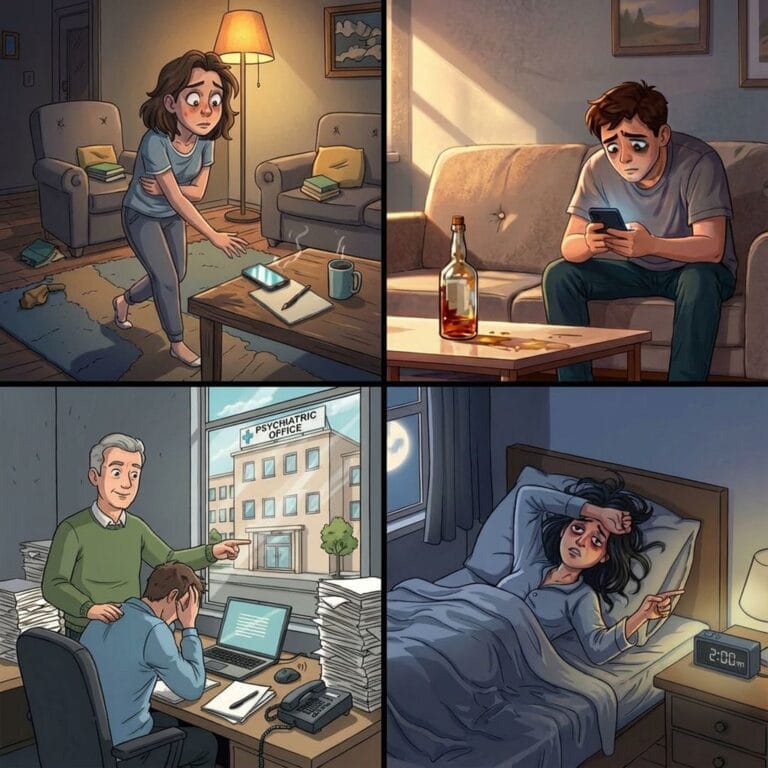
In contrast, 92% of people using psychiatric help are treated on an outpatient basis. The vast majority of them are ordinary people struggling with problems that affect millions. For example: a student with social anxiety who is afraid of public speaking; a new mother suffering from postpartum depression; a manager with symptoms of burnout and insomnia; a person in mourning who cannot cope with the loss of a loved one; or someone who has been struggling with intrusive thoughts or depression for years.
A visit to a psychiatrist really is no different from visiting a cardiologist for heart palpitations or an orthopedist after a sprained ankle. The brain is an organ—complex and incredibly important. When its biochemistry fails or when it is burdened by difficult experiences, it needs specialist help. Reaching for it is not a sign of weakness; on the contrary, it is an act of courage and responsibility for one’s own health.
2. Myth Two: Psychiatric drugs are addictive and change your personality
This fear comes up very often in conversations with patients. People are afraid they will become “zombies”—deprived of emotions, creativity, and the things that make them who they are. This myth often stems from the stereotypes described in the first myth.
In reality, modern psychiatric medications work subtly and in a way that is completely unnoticeable to those around you. Not only do they not change your personality, but they help you reclaim it. It is the illness—depression, anxiety, apathy—that changes how you feel, how you behave, and how others perceive you. The illness causes you to withdraw from relationships, lose interest, and feel constant anxiety. Correctly selected medications restore neurochemical balance (e.g., serotonin levels), allowing your natural emotions and true personality to emerge once again.
There are indeed medications that are addictive—these are sedatives and sleep aids from the benzodiazepine (BZD) group and their derivatives. Psychiatrists use these medications very cautiously and relatively rarely (they are much more frequently prescribed by GPs and other specialists). They are usually recommended for the first few days or weeks of treatment before the primary medications start working. With such caution, there is no risk of addiction (addiction requires regular intake for over a month). On the other hand, the majority of modern psychiatric drugs (such as the most commonly used SSRI antidepressants) are not addictive. After long-term use, the body becomes accustomed to their presence, which is why they are discontinued gradually under a doctor’s supervision to avoid withdrawal symptoms. However, this process is similar to tapering off medications for general conditions (e.g., hypertension) and has nothing to do with “drug cravings.” Most patients do not notice a difference in their well-being and feel no unpleasant effects when stopping the medication.
3. Myth Three: You just need to “pull yourself together”—it’s a matter of willpower
“Others have it worse,” “Just think positively,” “Go for a run, you’ll feel better.” I hear these “good tips” from patients who are quoting their loved ones. They stem from a misunderstanding of the nature of mental disorders. They treat depression or anxiety as a whim, laziness, or a character flaw. This is extremely hurtful to the ill person because it intensifies the guilt and shame they are already experiencing.
Telling a person with depression to “pull themselves together” is like telling someone with a broken leg to “just stop limping.” Some mental disorders are simply biological illnesses, much like asthma or thyroid disease. They are influenced by genetic factors, imbalances in neurotransmitters (chemicals in the brain), and changes in the functioning of certain brain regions. A large portion of psychiatric problems are, in turn, triggered by external circumstances and the associated stress. However, even then, a secondary biochemical imbalance occurs in the brain, and in many such situations, pharmacological help is also essential.
Willpower is, of course, important in the recovery process, but in itself, it is not the cure. Furthermore, the illness often weakens the very resources needed to fight—motivation, energy, and the ability to feel pleasure. Treatment does not replace willpower; it creates the conditions in which it can start working again. It gives the patient the tools and stable ground they need to move forward.
4. Myth Four: Pharmacotherapy is the “easy way out”
This belief suggests that medication is a shortcut for those who do not want to do the “real work” on themselves in therapy. I encounter this view quite regularly, especially among younger people who have heard that “therapy is the foundation, and drugs are cheating.”
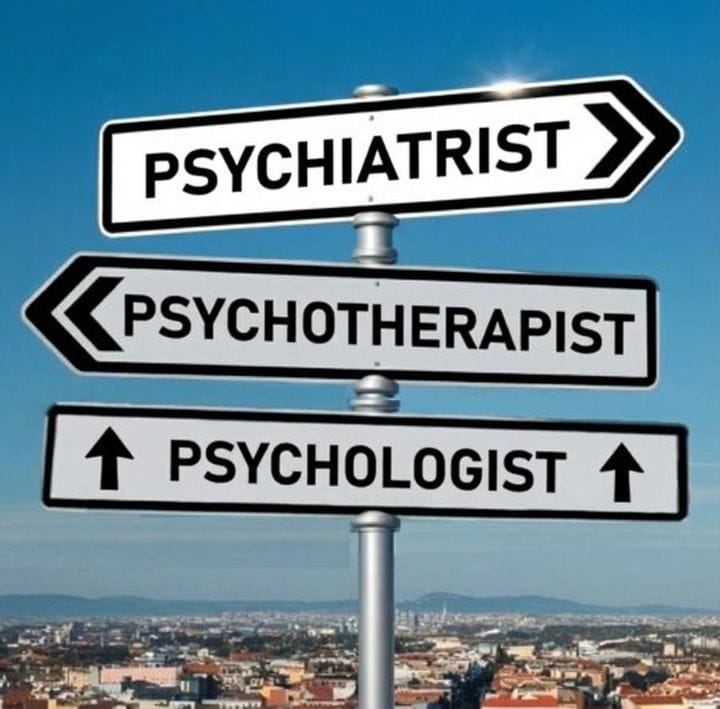
The reality is more complex. In many cases, medication is not an end in itself, but a tool that enables effective psychotherapy. When anxiety is so paralyzing that it prevents someone from leaving the house, or depression takes away the strength to get out of bed and focus one’s thoughts, it is very difficult to work constructively on one’s problems. Very often in such situations, psychotherapists refer their patients to a psychiatrist. This is because pharmacotherapy can lower the level of suffering to such a degree that the patient gains the energy and mental space to engage in the therapeutic process.
Psychiatric treatment is often not an “either-or” choice, but a synergy of action—medication helps stabilize the condition, while therapy helps understand the causes and learn how to cope with difficulties. Both elements complement each other. It is not taking the easy way out—it is the strategic use of available treatment methods.
5. Myth Five: Once I start taking medication, I’ll have to do it for the rest of my life
I hear the fear of being eternally dependent on pills very often, especially from people who have never had psychiatric treatment before. The prospect of lifelong treatment can be overwhelming and discouraging.
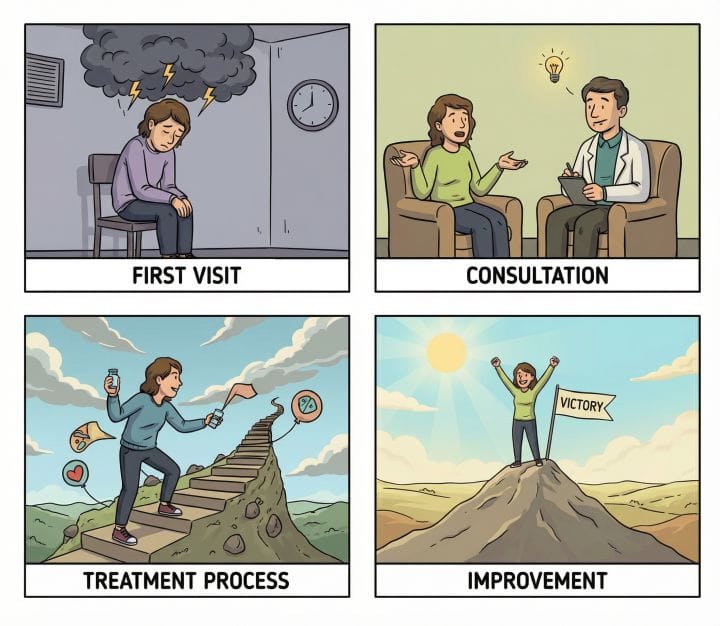
The length of treatment is always an individual matter, determined jointly by the doctor and the patient. Many disorders, such as a first depressive episode, are treated for a specific period—usually about 6–12 months after the symptoms have subsided, to prevent a relapse. After this period, if the patient’s condition is stable, the medication is gradually and safely discontinued.
Of course, there are chronic illnesses, such as bipolar disorder or some forms of recurrent depression, which may require long-term or even permanent treatment—just as hypertension or diabetes require constant medication. However, the goal is always to use the lowest effective dose for the shortest necessary time.
I hope that debunking these myths will allow for a better understanding of what modern psychiatry is. The decision to seek treatment is not an admission of failure—it is a conscious step toward improving your quality of life. If you feel that your mental well-being is hindering your daily functioning, do not let false beliefs and fear take away your chance for help. You can always talk to a specialist and together determine what form of help will be best for you.