Psychiatric treatment: From the first visit to recovery
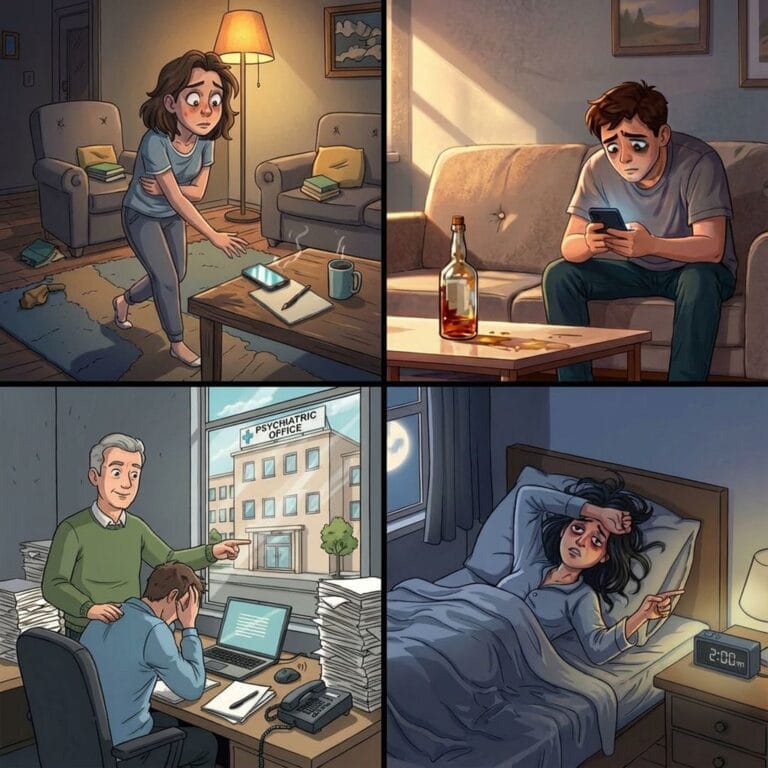
If you are considering visiting a psychiatrist, your head is likely filled with many questions and concerns. This is understandable – when you don’t know what to expect, it’s easy to feel anxious. This post was created to show you what psychiatric treatment really looks like – from the first contact to the moment you regain your balance. This isn’t a journey you take alone; it is a collaborative process with you and the doctor on the same side.
Decision and First Steps
Many people delay their visit because they feel shame, fear of judgment, or simply don’t know what to expect. I want to say this clearly: taking care of your mental health is just as normal and important as taking care of your heart or your spine. A psychiatrist does not judge – they help. Booking an appointment is a simple step – just fill out an online form. Full confidentiality applies from this very stage. If you prefer, you can write a few words about your difficulties, but you don’t have to. It is enough that you take that first step.
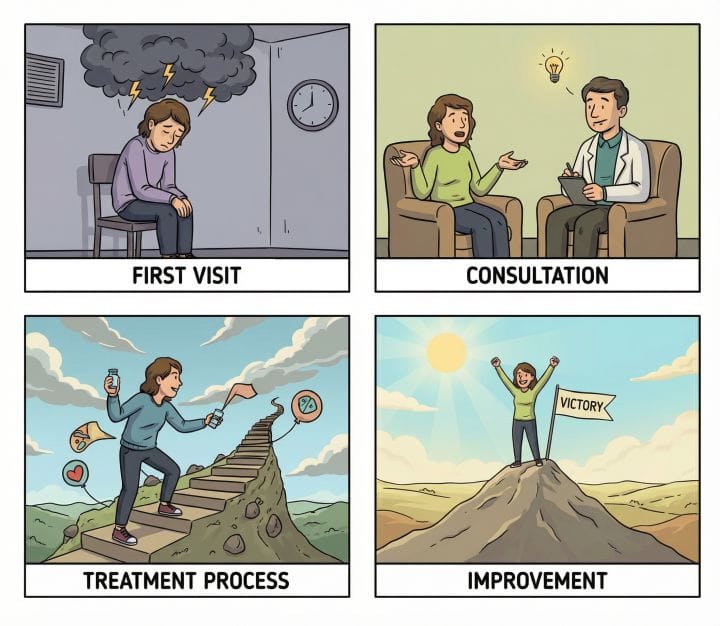
The First Visit – A Conversation in a Safe Space
The first consultation usually lasts 50–60 minutes. It is a calm conversation – not a test or an interrogation. We will focus on your well-being: what worries you, how long it has been going on, and what interferes most with your daily life. I will ask about your mood, sleep, energy, significant life events, family and professional situation, previous treatments, and general health. You don’t need to “prepare.” If you wish, you can bring a list of medications or test results, but it is not necessary. It is enough for you to come and tell me what is hurting. Sometimes I use short questionnaires – these are just tools to support the conversation, not an exam. The goal of the first visit is a preliminary diagnosis of the problem and mutually agreeing on the first steps. You will leave with a clear plan – without haste and without pressure.
Individual Treatment Plan
There is no single “template” that works for everyone. We create the plan together, taking your goals and preferences into account. It usually consists of several elements:
- Pharmacotherapy – when needed, it helps restore neurochemical balance and provides the space for further self-improvement. Most antidepressants and mood stabilizers are not addictive and do not change your personality. The goal is to support your natural resources, not replace them. Side effects, if they occur, are usually temporary – we always discuss them and modify treatment when necessary.
- Psychotherapy – often a key element that helps understand the source of difficulties and teaches new coping mechanisms. Depending on your needs, I recommend proven modalities or refer you to trusted therapists.
- Psychoeducation – the more you know about your condition, the more influence you have. We discuss the mechanisms behind symptoms, early warning signs of relapse, and prevention strategies. The plan remains flexible. If something isn’t working – we modify it.
The Treatment Process and the Path to Improvement
Follow-up visits usually take place every 2–6 weeks at the beginning, and less frequently later on. We check your well-being and the effectiveness of the treatment, and we strengthen your coping strategies. It is worth knowing that medications often need 2–6 weeks to take full effect – improvement comes gradually. If any worrying symptoms appear – let me know. Never stop taking medication on your own. Your honesty and consistency are key – you know your body and your life best. Improvement is not 24/7 euphoria. It is real change: more energy, better sleep, less anxiety, a return of interests and relationships, and regaining the ability to work or study. The path is rarely linear – there will be weaker moments. This is normal. The important thing is not to be alone when they happen.
Most Common Concerns – Quick Answers
- Will anyone find out? – No. I am bound by medical secrecy and data protection laws.
- Are medications addictive? – The vast majority of those used for depression and anxiety are not. Those that can be addictive are used cautiously and only for the short term.
- Maybe I’m not “bad enough” yet to see a psychiatrist? – You don’t have to “earn” help through a certain severity of symptoms. If you are suffering – that is enough.
An Invitation to Talk
Reaching out for psychiatric help is an act of self-care, not weakness. If you feel that the time has come, you are not alone. The first step – a conversation – can be the beginning of a completely new chapter. I invite you to my office. In a safe space, with mindfulness and without haste, we will look for solutions together that will truly help.